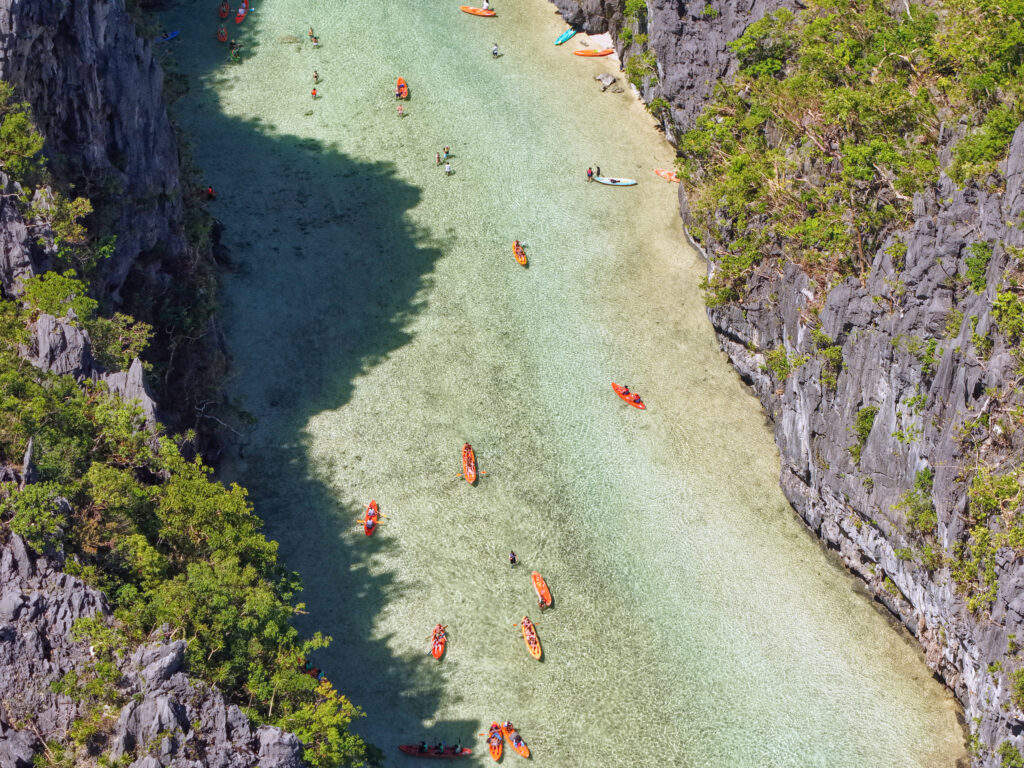
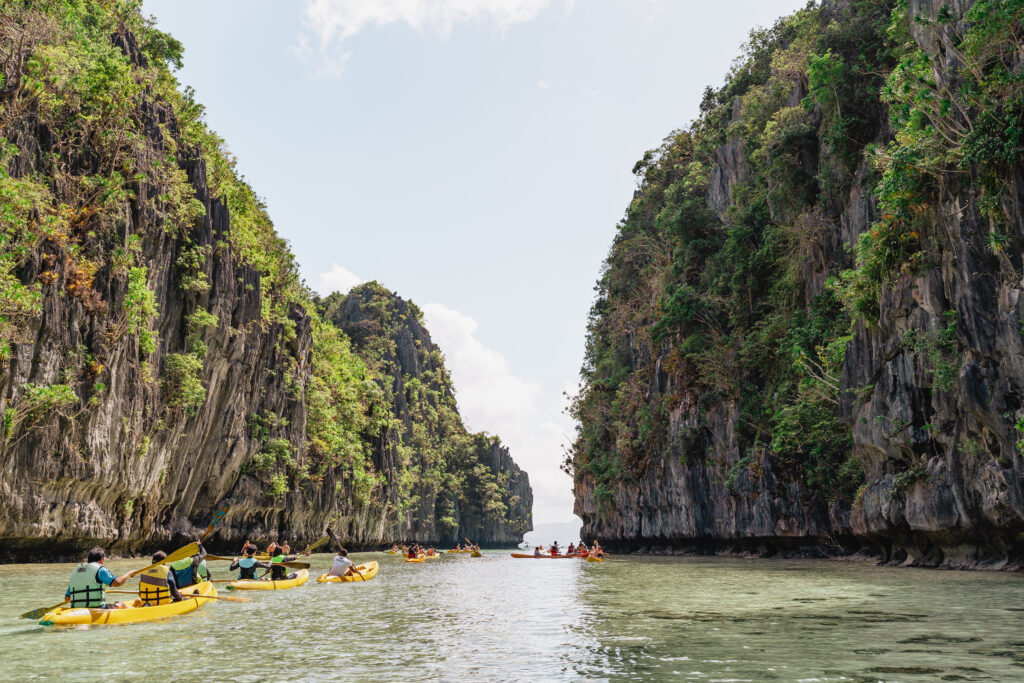
If there’s one photo that convinces people to book a flight to Palawan, it’s probably a kayak gliding through Big Lagoon El Nido, framed by those cathedral-like limestone walls. It’s the single most requested stop on El Nido’s Tour A, and honestly, it earns the hype. But there’s a difference between seeing the postcard shot and actually knowing what you’re getting into once you’re standing at the entrance with a paddle in your hand and a queue of other boats behind you.
This guide walks you through what kayaking in Big Lagoon is really like, how much it costs (rates shift more often than people expect), how long you actually get on the water, when to go if you want fewer people in your photos, and a few tips we’ve picked up from guiding travelers through Bacuit Bay ourselves.
What Makes Big Lagoon Worth Kayaking Into
Big Lagoon sits inside Miniloc Island, part of El Nido’s Tour A route, and it’s known for deep turquoise water enclosed by towering karst cliffs that seem to lean in over you as you paddle. Boats aren’t allowed past the entrance channel, which is exactly why kayaking exists here in the first place. It’s the only way to actually get inside and explore the wider basin beyond the mouth of the lagoon.
The water near the shallow entrance is typically crowded with swimmers and snorkelers, but once you paddle further in, the lagoon opens up and quiets down. There’s even a narrow rock channel near the far end that you can squeeze a kayak through, which feels like something out of an adventure film.
Big Lagoon’s Claim to Fame
Part of why Big Lagoon draws such a crowd is that its scenery has quite literally made it to the big screen. The closing scene of The Bourne Legacy (2012) was filmed here, with sweeping shots of the lagoon and nearby Helicopter Island. The film’s director and producer both went on record afterward raving about Palawan’s beauty, and that kind of exposure has stuck with the location ever since. If the cliffs and channel look familiar even on your first visit, that’s probably why.
Big Lagoon has also hosted world-class sporting events. It served as the site of the Red Bull Cliff Diving World Series in 2019, with professional divers launching off the surrounding limestone cliffs into the lagoon’s deep water below, a spectacle that put Big Lagoon in front of an international sports audience well beyond the usual travel crowd.
It’s also officially registered as a filming location with the Philippines’ Film Development Council, so it’s not unusual to spot production crews scouting the lagoon for upcoming projects. All of this is worth knowing not just as trivia, but because it explains why Big Lagoon tends to be busier and more heavily photographed than some of El Nido’s other lagoons. You’re not just visiting a pretty spot; you’re paddling through a location that’s genuinely made an international impression.
How Much Does Kayak Rental Cost at Big Lagoon
This is the part everyone wants a straight answer to, and we’ll give you one, with an honest caution: prices at Big Lagoon fluctuate depending on the season, the operator, and honestly, who’s collecting payment that day.
As of recent traveler reports, kayak rental at Big Lagoon generally falls somewhere between ₱150 and ₱400, with most people paying in the ₱250 to ₱400 range for a single session inside the lagoon. Some sources have quoted as low as ₱150 to ₱200 per kayak when it’s included as part of a group tour stop, while independent or peak-season rentals have run closer to ₱500 to ₱700 for extended use.
Here’s the truth: published prices for Big Lagoon kayak rental are inconsistent because rates often change and aren’t centrally regulated. Bring a bit of extra cash (in small bills) and treat any number you read online, including this one, as a starting estimate rather than gospel truth.
A few cost factors worth knowing:
- Tour A pricing already includes some fees, but kayak rental is almost always billed separately, on top of your tour cost.
- Environmental and lagoon entrance fees (typically a few hundred pesos combined) are separate from the kayak charge itself.
- Tandem kayaks cost slightly more than single kayaks but let you split the fee with a travel partner.
- Cash only. Don’t expect card payment options at the lagoon entrance.
If you’re booking through Experience Palawan, we always flag current rental pricing in our tour details so you’re not caught off guard on the day, since these numbers really do shift throughout the year.
How Long Do You Actually Get Inside the Lagoon
This trips people up more than the pricing does. Big Lagoon is one stop among several on Tour A, which typically covers Big Lagoon, Secret Lagoon, Shimizu Island, and Seven Commando Beach in a single day. That means your time at each stop is limited by the group’s overall schedule.
Most visitors get somewhere between 45 minutes and 1.5 hours at Big Lagoon, kayaking included. If you’re on a shared boat tour, your guide will usually give you a rough return time so the group can move on to the next stop without falling behind. Private tours and dedicated kayaking excursions tend to offer more flexibility, sometimes stretching your time inside closer to two hours.
If your main goal is kayaking Big Lagoon specifically rather than checking off every stop on Tour A, it’s worth asking your operator (or looking into a private or small-group option) whether extended time inside the lagoon is possible.
If you’re building out a longer El Nido itinerary around your Tour A day, pairing it with a sunrise hike up Taraw Cliff is a great way to round out an early morning before your boat departs, since both experiences reward getting up before the crowds do.
Best Time to Visit Big Lagoon to Avoid Crowds
Big Lagoon is popular enough that nearly every Tour A boat arrives within the same general window each morning, which means the entrance channel can get genuinely congested by mid-morning.
A few timing strategies that actually work:
- Book the earliest possible departure. Boats that leave El Nido town closer to 7:00 or 7:30 AM tend to reach Big Lagoon before the bulk of the fleet.
- Ask about reverse-route tours. Some operators run Tour A in the opposite order, hitting Big Lagoon later in the day when the morning rush has cleared out.
- Avoid peak season weekends. The dry season, roughly November through May, brings the best weather but also the biggest crowds, especially around holidays.
- Consider a private tour. If flexibility matters more to you than saving a bit of money, a private boat lets you set your arrival time and skip the group bottleneck entirely.
If you’re weighing up whether to spend more of your day in the water versus on land, our guide to whether Nacpan Beach is swimmable is worth a read too. It’s a suitable option for an afternoon after your Tour A boat gets back, once you’ve had your fill of lagoons for the day.
Kayaking Tips for Big Lagoon (From People Who’ve Actually Done It)
A short list of things that make the experience smoother, based on repeat trips and traveler feedback:
- Wear a rash guard or reef-safe sunscreen. There’s little shade once you’re paddling, and the glare off the water is intense even on cloudy days.
- Secure your phone or camera in a dry bag. Kayaks tip easier than they look, especially with two people paddling out of sync.
- Go tandem if you’re a beginner. Sharing the paddling load makes the narrow rock channel section much easier to navigate. If you’re traveling with kids or non-swimmers, our family safety guide for Palawan covers life jacket policies and what to expect on lagoon stops like this one.
- Paddle toward the edges for photos. The center of the lagoon gets crowded with other kayaks, but the sides near the cliff walls offer cleaner shots and calmer water.
- Watch for sea urchins near the shallow entrance. Water shoes are worth packing if you plan to wade at all.
- Don’t rush the far channel. The narrow passage at the back of the lagoon is one of the best parts of the experience, so budget a few extra minutes to actually enjoy it instead of racing through.
Photo Tips: Getting the Shot Without Holding Up the Line
Big Lagoon photos tend to look similar because everyone shoots from the same spot near the entrance. A few ways to stand out:
- Shoot early. Soft morning light against the limestone cliffs photographs far better than the harsh midday glare.
- Get low. Angling your camera near the waterline exaggerates the height of the cliffs and makes the lagoon feel more dramatic.
- Use the narrow channel as a frame. Positioning your kayak just before the rock passage creates natural leading lines toward the open water beyond it.
- Be quick and considerate. Other kayakers are waiting behind you at popular photo spots, so take your shot and move along.
Want to enhance your shots afterward? Take a look at these photo tips for editing them.
A Quick Case in Point
Travelers who’ve paddled Big Lagoon on early departures consistently report a noticeably different experience than those arriving mid-morning.
On one recent Experience Palawan-guided trip, a small group that left the dock before 7:30 AM had the far end of the lagoon almost entirely to themselves for nearly twenty minutes, something that simply isn’t possible once the standard 9 AM wave of boats arrives. It’s a small scheduling choice that makes a real difference in how the lagoon actually feels once you’re inside it.
Planning Your Big Lagoon Visit
Kayaking Big Lagoon is one of those experiences that’s genuinely worth the hype, as long as you go in with realistic expectations about crowds, timing, and cost.
Prices for kayak rental will keep shifting year to year, so treat any figure you read (including ours) as a guide rather than a fixed number, and always confirm on the ground or with your tour operator.
If you’re mapping out your full El Nido itinerary, our team at Experience Palawan can help you build a schedule that gets you to Big Lagoon before the crowds, pair it with the right nearby stops, and make sure you’re not overpaying for extras you don’t need.
Ready to plan your Big Lagoon adventure? Get in touch with Experience Palawan for tour recommendations, current pricing, and insider tips on making the most of your Palawan trip.