
Walking through Palawan feels like stepping into nature’s most exclusive collection. The wildlife here doesn’t just exist—it thrives in ways you won’t find anywhere else on Earth. Palawan wildlife represents one of the Philippines’ most treasured biodiversity hotspots, where millions of years of isolation created species that call only this island province home.
Geographic separation works magic on evolution. When land masses drift apart, animals and plants adapt in extraordinary ways. Palawan’s unique position as a bridge between Southeast Asia and the broader Pacific has resulted in an incredible 15% of its vertebrate species being found nowhere else on the planet.
Discovering Palawan Endemic Species in Ancient Rainforests
The island’s dense rainforests shelter some of the world’s most fascinating creatures. Every step through these ancient woodlands reveals another evolutionary wonder.
The Palawan bearcat, also known as the binturong, moves through the canopy like a living shadow. This bear-like creature with cat-like agility possesses one of nature’s most unusual traits—it smells exactly like buttered popcorn. Scientists believe this distinctive scent helps bearcats communicate across the dense forest.
High in the trees, Philippine tarsier Palawan populations represent some of the smallest primates on Earth. These nocturnal creatures have eyes larger than their brains. Their massive eyes collect light efficiently, making them exceptional night hunters. Each tarsier can rotate its head nearly 180 degrees in either direction.
Palawan rainforest animals showcase incredible adaptation strategies:
- The Palawan peacock-pheasant displays iridescent plumage that shimmers like metallic jewels
- Palawan stink badgers use powerful scent glands as their primary defense mechanism
- Flying squirrels glide between trees using membrane wings spanning their entire body length
- Pangolins roll into armored balls when threatened, becoming virtually impenetrable
Unfortunately, deforestation threatens these forest ecosystems daily. Illegal logging and agricultural expansion continue to fragment habitats that took millions of years to develop.
Exploring Marine Ecosystems and Tubbataha Reefs National Park
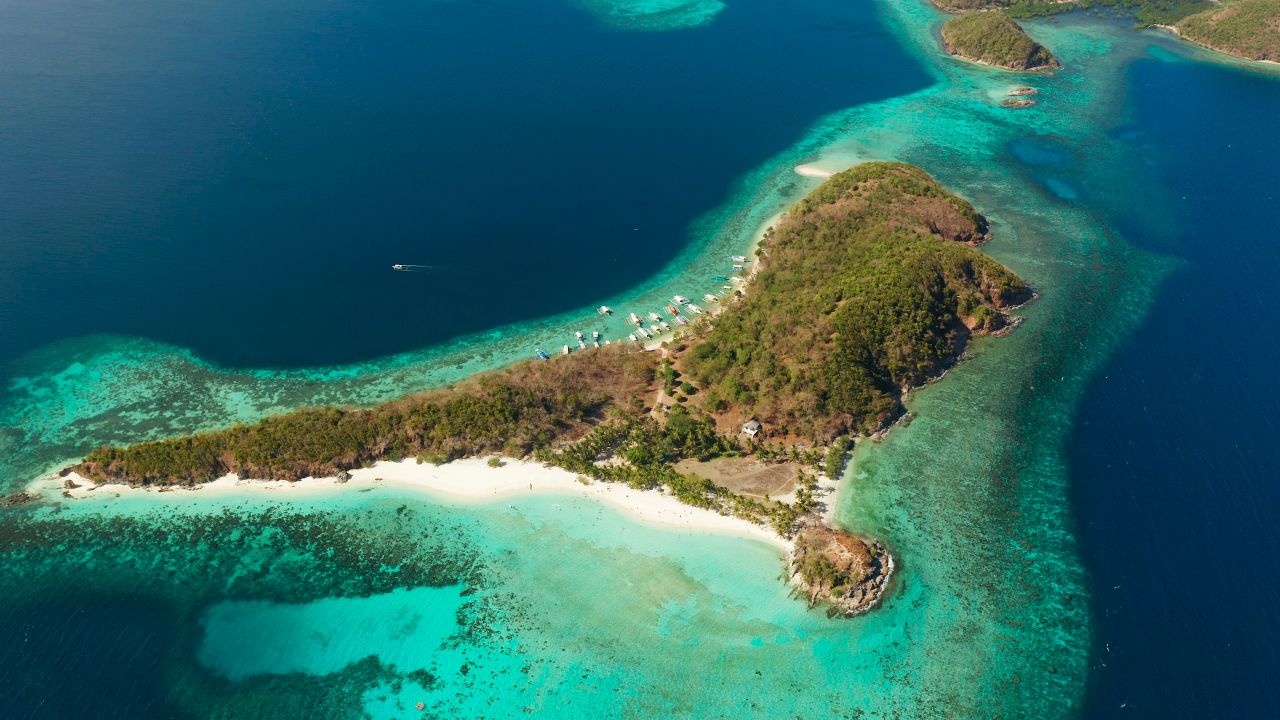
Palawan’s marine environments rival its terrestrial wonders in both beauty and biological importance. The surrounding waters host coral reefs, seagrass beds, and mangrove systems that support countless species.
Tubbataha Reefs National Park earned UNESCO World Heritage status for good reason. This marine sanctuary, accessible only by liveaboard diving trips, protects 97,030 hectares of pristine coral reefs. The park hosts over 600 fish species, 360 coral species, and serves as a critical breeding ground for several endangered species.
Whale sharks frequent these waters seasonally. These gentle giants, measuring up to 12 meters long, filter-feed on plankton and small fish. Green sea turtles and hawksbill turtles nest on the park’s remote beaches, continuing reproduction cycles that have occurred for thousands of years.
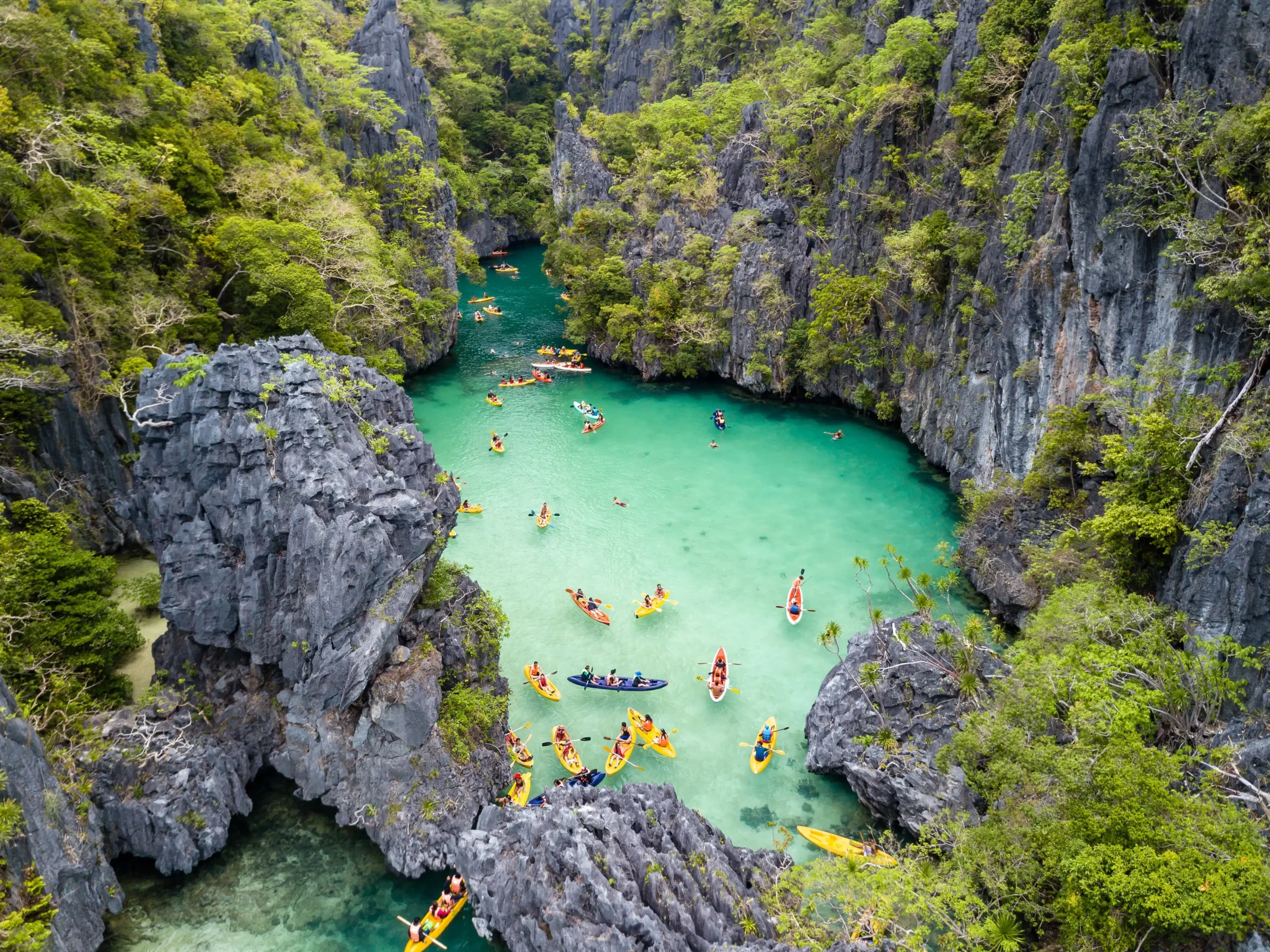
El Nido marine life offers more accessible encounters with Palawan’s aquatic biodiversity. The limestone karsts create protected lagoons where:
- Spinner dolphins perform acrobatic displays at sunrise
- Manta rays glide through nutrient-rich currents
- Clownfish dart between anemone gardens
- Reef sharks patrol the coral walls
The Puerto Princesa Subterranean River represents a unique cave ecosystem where freshwater meets saltwater. This underground river system extends 24 kilometers, creating habitats for specialized cave-dwelling species. Blind cave fish navigate using lateral line systems, while swiftlets use echolocation to nest in complete darkness.
Mangrove forests along Palawan’s coastline function as nurseries for juvenile fish while protecting shorelines from erosion. These salt-tolerant trees create complex root systems that filter pollutants and provide breeding grounds for countless marine species.
Supporting Palawan Conservation Efforts Through Responsible Tourism
Protecting Palawan ecosystems requires coordinated efforts between government agencies, non-governmental organizations, and local communities. The challenge is significant but not insurmountable.
Community-based conservation programs empower indigenous peoples to protect their ancestral lands while generating sustainable income. The Tagbanua people of Coron have successfully managed their marine resources through traditional governance systems combined with modern conservation science.
Research initiatives studying Palawan endemic species provide critical data for protection strategies. Scientists use camera traps, acoustic monitoring, and genetic analysis to understand population dynamics and habitat requirements. This research informs policy decisions and conservation priorities.
Sustainable tourism practices can either support or threaten wildlife protection efforts. Visitors play a vital role in conservation success through responsible choices:
- Choose tour operators committed to environmental protection
- Respect wildlife viewing distances and guidelines
- Support local communities through authentic cultural experiences
- Minimize plastic use and waste generation
- Donate to established conservation organizations
The future of Palawan biodiversity depends on balancing economic development with environmental protection. Tourism revenue can fund conservation efforts when managed responsibly, creating positive feedback loops that benefit both wildlife and local communities.
Planning Your Wildlife Adventure Responsibly
Experiencing Palawan‘s incredible biodiversity creates lasting memories while supporting conservation efforts. The key lies in choosing experiences that prioritize animal welfare and habitat protection.
Many operators now offer wildlife photography workshops led by conservation biologists. These programs teach visitors about animal behavior while generating funding for research projects. Night walks in primary forest areas provide opportunities to observe nocturnal species without disturbing their natural behaviors.
Marine conservation tours combine snorkeling and diving with citizen science projects. Visitors can contribute to coral reef monitoring programs, sea turtle nest surveys, and marine debris cleanup initiatives.
The best wildlife encounters happen when animals remain wild and free. Avoid attractions that keep wildlife in captivity or encourage direct contact with wild animals. Instead, seek out experiences that observe animals in their natural habitats from respectful distances.
FAQ (Frequently Asked Questions)
What makes Palawan wildlife so unique compared to other Philippine islands?
Palawan’s geographic isolation created distinct evolutionary pathways for its wildlife. The island was never connected to the main Philippine archipelago, allowing species to evolve independently for millions of years. This isolation resulted in high levels of endemism, with many species found nowhere else on Earth.
When is the best time to visit Palawan for wildlife viewing?
The dry season from November to April offers the best conditions for both terrestrial and marine wildlife viewing. During this period, forest trails are more accessible, marine visibility is optimal, and many species are more active. However, some marine species like whale sharks follow seasonal migration patterns that vary by location.
How can tourists support Palawan conservation efforts during their visit?
Tourists can support conservation by choosing eco-certified tour operators, staying in accommodations committed to sustainability, participating in citizen science programs, donating to local conservation organizations, and following responsible wildlife viewing guidelines. Supporting community-based tourism initiatives also directly benefits conservation efforts.
Are there any endangered species that visitors might encounter in Palawan?
Visitors may encounter several endangered species including the Philippine pangolin, Palawan bearcat, various sea turtle species, and the Philippine cockatoo. However, encounters with endangered species should always occur through responsible wildlife viewing practices that prioritize animal welfare and habitat protection.
What should visitors know about marine protected areas in Palawan?
Palawan has numerous marine protected areas with specific regulations designed to protect coral reefs and marine life. Visitors must follow guidelines regarding anchoring, fishing, collecting marine specimens, and maintaining appropriate distances from marine animals. Many areas require permits and certified guides for access.